

Add Professional Hair Regrowth Treatments to Your Clinic with Fotona
Hair thinning is a concern that brings patients into aesthetic and hair-restoration clinics every day. For clinics, the challenge is finding a treatment that fits naturally alongside existing services, offers a clear patient journey and is supported by professional training.
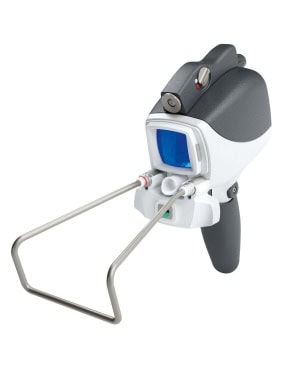
Fotona HAIRestart® gives UK clinics a non-invasive laser option for hair-growth stimulation using controlled Er:YAG energy. Rather than adding another home-style LED cap or a hair-only machine, clinics can introduce hair restoration through a professional Fotona laser platform that may also support other aesthetic treatments.
“Speak to a Fotona Specialist”
Not sure which system fits your clinic? Tell us about your current services and the treatments you want to introduce. We can help you compare suitable Fotona platforms.
What Is a Hair Restoration Laser Machine?
A professional hair restoration laser machine is used to deliver controlled light or laser energy to the scalp with the aim of supporting weakened hair follicles and improving hair growth in suitable patients. There are several types of systems on the market. Some use red or near-infrared low-level laser therapy, often through helmets or overhead panels. Others use LED technology. Fotona takes a different approach. HAIRestart® uses a “2940 nm Er:YAG laser in SMOOTH® mode”. The laser delivers mild, controlled thermal pulses to the scalp without significantly removing the skin surface. The aim is to stimulate biological activity around existing follicles while keeping treatment non-invasive.
For clinics, the important point is that this is not laser hair removal technology. Hair removal lasers are designed to damage follicles. Hair restoration systems are used with the opposite aim: supporting follicles that are still present but producing weaker hair.
How Does Fotona HAIRestart® Work?
Hair follicles move through a natural cycle of growth, transition and rest. In androgenetic alopecia, commonly known as male or female pattern hair loss, follicles gradually become smaller. Each new hair can become finer and shorter until the scalp looks noticeably thinner. Fotona’s SMOOTH® mode delivers a sequence of gentle Er:YAG pulses that heat scalp tissue in a controlled way without significant epidermal ablation.
Research into non-ablative Er:YAG treatment suggests that this controlled thermal effect may influence wound-healing signals, local circulation and processes involved in the hair-growth cycle. The exact mechanism is still being studied, which is why a good clinic should avoid promising guaranteed regrowth. In practical terms, the treatment is designed to create a controlled stimulus around follicles that are still capable of producing hair.
What Type of Hair Loss Can Clinics Treat?
The strongest published evidence around laser hair-growth treatments is generally linked to androgenetic alopecia. That includes male-pattern and female-pattern hair thinning, where follicles gradually miniaturise but remain present. This distinction matters. Laser treatment is unlikely to recreate follicles that have been permanently destroyed. A patient with a long-standing smooth bald area may therefore need a different approach, such as hair transplantation.
Hair shedding may also have causes that need medical investigation. Hormonal changes, thyroid problems, nutritional deficiencies, medication, childbirth, illness and some inflammatory scalp conditions can all lead to hair loss. A professional hair-restoration service should therefore begin with assessment rather than simply selling sessions.
What Does the Research Say?
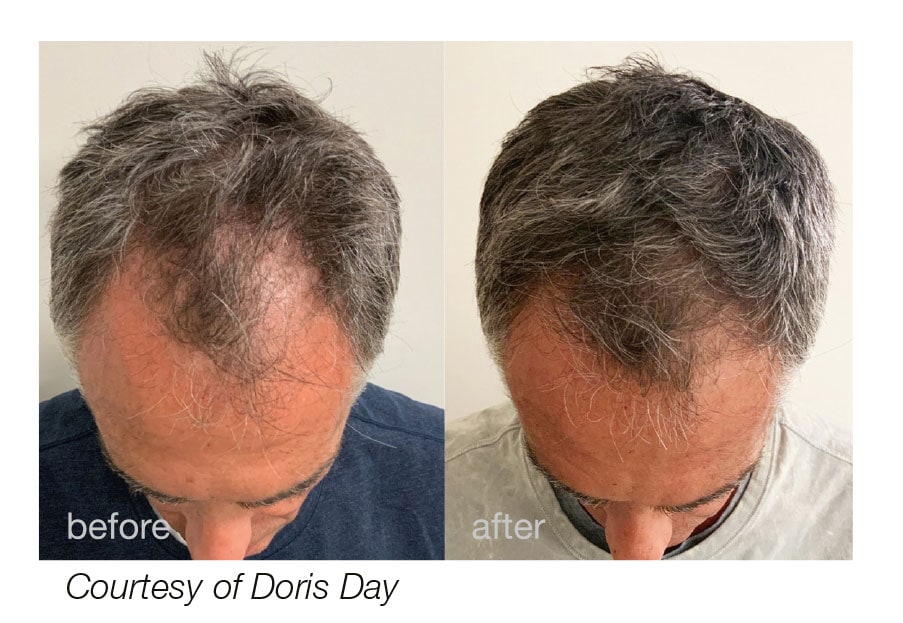
Hair-restoration marketing is full of big promises, so clinics should look closely at the quality of the evidence. A published clinical study of non-ablative Er:YAG treatment followed 16 patients with androgenetic alopecia. Patients received laser therapy either on its own or alongside treatments such as PRP, minoxidil or supplements. Blinded assessment found improvement in hair quality in most patients, although the researchers correctly noted that the effect of combined treatments could not be completely separated. More recently, a 2025 study assessed 32 men and women treated with a 2940 nm non-ablative Er:YAG laser. Patients received six sessions at two-week intervals. Visible improvement and high patient satisfaction were reported, with no adverse reactions recorded in that study. The same research also highlighted an important limitation: larger studies and longer follow-up are still needed. That is the sort of detail patients increasingly appreciate. Good clinics do not need to oversell technology to make it valuable.
Why Hair Restoration Can Be a Useful Clinic Service
Hair-loss patients often need a longer treatment journey than patients booking one-off cosmetic procedures. That can make hair restoration a good fit for clinics that already offer skin, injectable or regenerative services. Patients may attend for an initial assessment, a course of laser sessions, progress photography and later maintenance.It also opens the door to carefully planned combination care.
Some clinics use laser alongside established approaches such as topical minoxidil or platelet-rich plasma where clinically appropriate. Combination treatment should always have a clear reason rather than simply adding more services to increase the bill. The strongest commercial model is one built around proper assessment and measurable progress.
Why Fotona Is Different from a Dedicated Hair Laser Cap
Many professional hair-regrowth machines are essentially larger versions of low-level laser or LED devices.They can be useful, particularly in specialist hair clinics. But they usually do one main job. Fotona offers a different business model. HAIRestart® is available on selected Fotona systems that can also support other aesthetic applications. For a clinic with limited room or a broad patient base, that may make the equipment more useful across the working week. Instead of asking only, “How much revenue can hair restoration make?”clinic owners can ask a better question: “How many services can this platform support in my practice”? That matters because equipment utilisation has a major effect on real return on investment.
Which Fotona Platforms Can Support HAIRestart®?
Fotona UK currently lists HAIRestart® with systems including “SP Dynamis Nx Line, SP Dynamis and TimeWalker Fotona4D”, depending on configuration and availability. The right platform depends on what else your clinic wants to offer. A hair-focused practice may prioritise the HAIRestart protocol itself. A broader aesthetic clinic may want the same platform to support facial rejuvenation, resurfacing or other Fotona treatments. That is why equipment selection should begin with the clinic’s treatment menu rather than simply choosing the machine with the longest specification sheet.
What Should Clinics Consider Before Buying?
Patient demand
Start with your existing patients. How many ask about thinning hair, widening partings or early-pattern hair loss? A genuine local demand is much more valuable than a treatment trend on social media.
Training
The team needs more than machine settings. Practitioners should understand hair-loss patterns, patient selection, contraindications, photography and when a patient needs medical referral.
Treatment-room time
Calculate the full appointment time, not just laser-on time. Include consultation, photography, scalp preparation and follow-up.
Service and downtime
Ask about warranty, engineer support, maintenance and what happens if the machine is temporarily unavailable.A laser that cannot be used cannot generate revenue.
Total platform value
If the device also supports services your clinic already sells, the investment may make more sense than purchasing a dedicated hair-regrowth unit used only a few hours each week.
Training, Safety and UK Clinic Responsibilities
- Professional laser equipment requires proper controls.
- UK guidance for medical and aesthetic laser use covers risk management, equipment safety and staff protection. Clinics working with higher-powered laser equipment need suitable training, risk assessments and appropriate safety procedures.
- Requirements can also vary according to location and whether treatment is being provided for a medical condition or purely cosmetic reasons.
- Before introducing a service, clinics should check current national requirements, local council rules and their insurer’s conditions.
- The safest approach is straightforward: trained practitioners, appropriate equipment, clear protocols and honest patient selection.
Fotona Services Beyond Hair Restoration
A Fotona platform can support more than hair-growth stimulation. Depending on the system, configuration and practitioner training, clinics may also offer treatments such as Fotona4D ® facial rejuvenation, SmoothEye®, LipLase®, skin resurfacing, scar revision, vascular treatments, hair reduction and TightSculpting®. This wider treatment range can help clinics spread equipment use across several patient needs rather than relying on one service alone.
Why Choose Fotona UK?
Buying professional laser equipment is not simply an online purchase. The machine has to fit the clinic, the practitioners need to understand it, and the service has to make sense for the patients you actually see.
Fotona UK supports clinics with equipment selection, training, technical support and servicing. The aim is to help practices choose technology they can use confidently rather than buying more machines than they need. If hair restoration is part of your growth plan, our team can help you look at HAIRestart® alongside the wider treatment possibilities of each Fotona platform.
Ready to Add Hair Restoration to Your Clinic?
If you are comparing hair restoration laser machines in the UK, speak to Fotona UK before making a decision. We can discuss your clinic size, existing treatment menu, patient demand and plans for future expansion, then help you compare the systems that best fit your practice.
FAQs
What is the best hair restoration laser machine for a UK clinic?
There is no single best machine for every clinic. A hair-only practice may prefer a dedicated hair-growth system, while a broader aesthetic clinic may get more value from a multi-application platform such as Fotona that also supports other treatments.
How is HAIRestart different from low-level laser therapy?
Many hair-growth devices use red or near-infrared low-level laser light. HAIRestart uses non-ablative 2940 nm ER energy in Fotona SMOOTH® mode to deliver controlled thermal stimulation to scalp tissue.
Can laser treatment regrow hair on a completely bald scalp?
Laser treatment is intended to support follicles that are still present. It cannot reliably recreate follicles that have been permanently lost, so assessment is important before treatment begins.
Which Fotona machines can offer HAIRestart?
Fotona UK lists HAIRestart with selected platforms including SP Dynamis Nx Line, SP Dynamis and TimeWalker Fotona4D. Exact availability and configuration should be confirmed with Fotona UK.
Does Fotona UK provide training and support?
Fotona UK provides practitioner training as well as support and servicing for its laser systems. Clinics should discuss the exact training and support package when choosing equipment.

© 2026 Fotona Lasers - UK & Ireland. All Rights Reserved.
Fotona UK is a trading name of Castle House Medical Limited. Company number: 11064428.
Worthy House, 14 Winchester Road, Basingstoke, Hampshire, United Kingdom, RG21 8UQ
Call Sale: 01184 300 005
info@fotonauk.co.uk
Website powered by King Orange.