

Deciding on and then purchasing a medical laser is an important process for a laser clinic in the UK. As well as equipment costs and staff training, consideration should also be given to the type of treatment to be offered. Prior to buying equipment it can also be useful to determine whether or not a clinic is legally and safely compliant.
Whilst some laser clinics and their associated treatments do require registration with the Care Quality Commission (CQC), not all laser treatments are covered in this way. Specific healthcare provision and/or surgery may also require local council licensing.Even if a clinic does not require CQC registration, further local licensing and laser safety regulations may apply.
Regulations also differ between Scotland, Wales and Northern Ireland.Prior to purchasing a Fotona laser system, clinics should investigate the treatments they wish to offer, the qualifications of those offering these, together with equipment, laser safety and insurance information. Just because a clinic has laser equipment that is compliant, this does not in itself mean that it is authorised to offer all possible treatments.
Quick Answer
In England CQC registration will depend on the type and method of treatment a laser clinic offers. Generally, purely cosmetic laser treatments do not need CQC registration. However, medical treatments, surgery and healthcare provision may require CQC registration. Additional local council licensing and laser safety regulations may also apply.
What Is CQC registration and why is it important?
The Care Quality Commission oversees health and adult social care provision in England.
It ensures that organisations offering regulated healthcare services operate to an appropriate standard of safety and quality.
Whilst a laser is bought and/or used, this, in itself, does not mean that a business is regulated by the CQC.The important question is what the clinic does with the equipment.
For example, a clinic offering purely cosmetic laser hair removal is likely not to require CQC registration. However, a medical service that uses a laser as part of treatment for an injury or a disease may require CQC registration, again depending on the method of healthcare provision.
Clinics should therefore evaluate what they actually offer to determine whether CQC registration is needed – it is not always the case that this will be required just because medical quality equipment is used.
When is CQC registration needed for a laser clinic?
Cosmetic Laser Treatment
Generally, in England, purely cosmetic laser treatments are not included within the scope of CQC regulation.Such treatments may encompass some hair removal and skin renewal services, for instance.
Despite this, clinics remain accountable for ensuring that they offer safe treatment. Further, alongside CQC registration, additional regulations relating to workplace safety and local council licensing may continue to apply.
Medical and Surgical Laser Treatment
Where lasers are used in the treatment of known medical conditions and/or during surgery, different circumstances can arise.The CQC will look at whether a service requires the expertise of a named healthcare professional, involves further regulated healthcare provision and/or is classed as surgery.
Indeed, laser treatment that is part of expert medical care may have different registration requirements when compared to purely cosmetic skin treatment.To be safe, clinics should analyse the treatments they wish to offer and refer to current CQC guidance on registration scope.
Are UK laser regulations the same across the UK?
No. Only in England is CQC registration applicable.
| UK Nation | Registration considerations |
| England | CQC registration (where within its remit). Council licensing may also be relevant. |
| Scotland | Healthcare Improvement Scotland regulates pertinent independent healthcare provision. Further non-surgical cosmetic regulations are currently being developed and applied. |
| Wales | Generally, Healthcare Inspectorate Wales requires registration for premises offering Class 3B/4 laser and/or IPL (intense pulse light) treatment. There are however, exceptions to this rule. |
| Northern Ireland | RQIA regulates relevant cosmetic laser provision, including Class 3B/4 lasers and/or IPL. |
For example, a Cardiff clinic may be required to register with Healthcare Inspectorate Wales, even though an equivalent purely cosmetic clinic in England would not need to register with the CQC.Further, even in London a clinic may need to acquire a special licence for treatment from its borough council.
Always research and confirm what is relevant to your region prior to purchasing laser equipment and promoting treatments.
What laser safety regulations apply in the UK?
As previously mentioned, laser safety is separate from healthcare regulation.The Health and Safety at Work etc. Act 1974 and the Control of Artificial Optical Radiation at Work Regulations 2010 establish important workplace responsibilities.
These aim to ensure that employees and others are not exposed to damaging levels of optical radiation (including lasers).
Laser Risk Assessment
A clinic should complete a laser risk assessment. Within this, issues relating to the laser, treatment suite and associated treatments should be analysed. Particular areas for investigation may include the likelihood of unintended exposure to laser radiation, reflectivity and access.Lasers can be unsafe for both eyes and skin. Some systems also present fire and smoke-related hazards.
Eye protection and restricted access
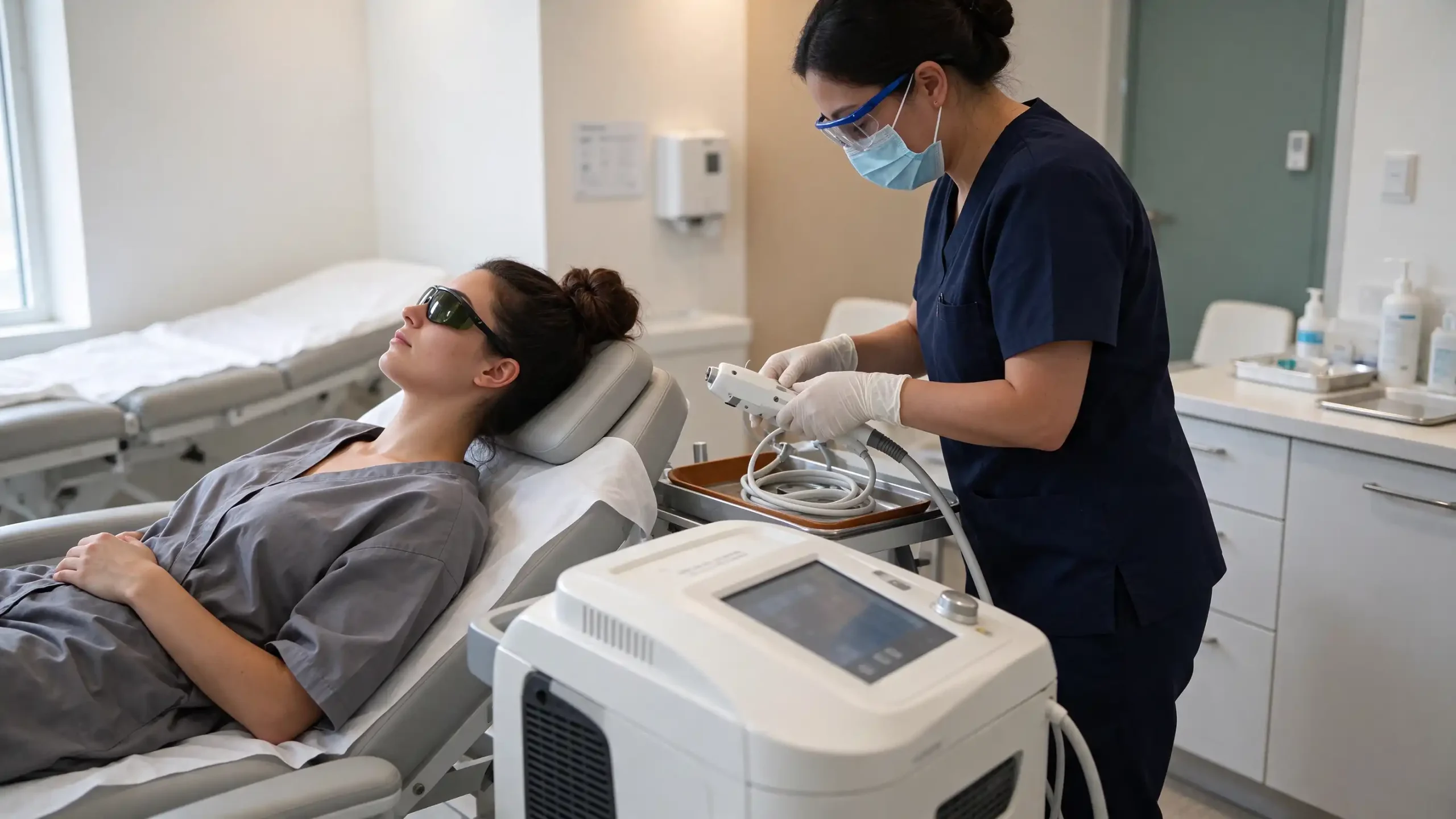
Staff and patients should wear eye protection that is suitable for the wavelength of the laser and for the treatment. Not all eye protection is appropriate for medical lasers.Furthermore, the clinic’s treatment suite should have suitable access control and displays together with other safety features. Again, these precautions should be documented and updated where there are changes to equipment and/or treatment.
What Is the Role of a Laser Protection Adviser and Supervisor?
Laser Protection Advisers (LPAs) are experts in lasers and can advise on potential risks and the most suitable ways to manage these.An LPA can assist a clinic in developing risk assessments, local safety guidance and in assessing the suitability of a treatment suite’s safety features.
Local safety guidance comprises written information detailing the correct way to utilise equipment safely.A Laser Protection Supervisor (LPS) then works to ensure that these guidelines are effectively applied within a clinic on a day-to-day basis.
Requirements for, and documentation relating to, Laser Protection Advisors and Supervisors will vary according to relevant regulations, council licensing and the clinic environment.
The British Medical Laser Association has professional guidance on laser protection supervision. Again, clinics should access suitably qualified expert advice in this field, in addition to and not in replacement for equipment training.
What Training and documentation should a Laser Clinic Have?
Staff require training on more than just basic operation of laser equipment. Training should include information about the equipment, suitable treatments, patient suitability, contra-indications, laser safety and management of complications.
Clinics should also maintain clear clinical procedures. Usually this includes:
- Patient interview details
- Patient consent
- Relevant patient medical information
- Treatment parameters
- Post-treatment information
- Incident reporting
Equipment servicing information is additionally important. A clinic should be able to show that equipment has been appropriately serviced and that personnel know how to manage safety issues.
Although a laser system can have multiple treatment functions, not all staff may be suitably qualified to carry out all of these functions.
How Do Fotona Laser systems comply with UK regulations?
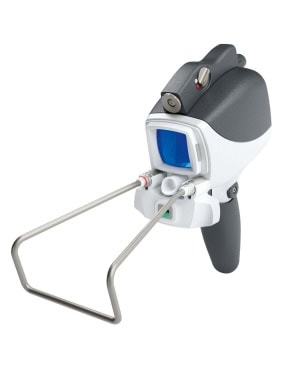
Fotona has medical, dental and aesthetic laser systems.The SP Dynamis system utilises two laser wavelengths:
Er:YAG at 2940 nm is highly water soluble and so can be used to selectively treat upper layers of tissue. Such treatment might include skin renewal.
Nd:YAG at 1064 nm is able to affect deeper tissue layers and so has a different function scope.
Given that the two lasers affect tissue in differing ways, laser safety and eye protection should correspond to the type of treatment being conducted.
Although a multi-functional laser system can offer greater versatility, the correct training, assessment and regulatory evaluation will still be required for each planned treatment. Equally, a clinic’s equipment capabilities should not be equated with its authorisation to offer all possible treatments.
What should a clinic investigate before purchasing a Fotona laser?
Initially, clinics should decide on the treatments they wish to offer.They should then determine whether these require healthcare registration, council licensing and/or further professional regulation.
Equipment information is also crucial. Clinics should seek from a laser system supplier details of relevant CE or UKCA product conformity, user guidance, laser safety data, servicing and training information.Medical device regulations can also differ between Great Britain and Northern Ireland, so it is important to recognise where equipment is to be marketed.
Insurance should also correspond to the treatments and personnel involved.
Whilst a clinic may provide purely cosmetic skin renewal treatment, a dental clinic may wish to begin offering laser enhanced dental services, and the latter will have differing insurance requirements.
As well as equipment, staff training and laser safety, further factors should be taken into account and integrated into a clinic’s overall investment strategy.
Fotona UK has details of its laser training and servicing support. These can be reviewed by clinics when researching laser systems.
Are UK Laser Regulations Changing?
Yes. In particular, clinics should monitor developments, especially in England.
In October 2026 the UK Government launched a consultation into proposals to limit certain non-invasive cosmetic and wellbeing treatments to those healthcare professionals who are suitably qualified.
Included in these proposals are defined laser treatments such as some ablative and high risk treatments.Please note that these are new proposals and are not existing, universally applicable regulations for all laser clinics.
Legislation has also been enacted in Scotland concerning non-surgical cosmetic treatments. Again, the application of this is something that should be carefully researched.
Continually monitoring regulatory changes is an important element of good business practice for those investing in lasers.
Conclusion:
In addition to CQC registration, there are various further aspects to delivering a safe and compliant laser service.
Clinics should therefore first define their treatment provision. They can then research relevant regional regulations and implement suitable safety procedures.
Although a Fotona laser system may enable a clinic to widen the scope of treatments it provides, appropriate personnel, facilities and documentation will also be needed.
Those researching laser equipment should contact Fotona UK to discuss their planned treatment provision, together with training and equipment information. Registration queries should always be directed to the relevant regulatory body.
FAQs
1. Do all cosmetic laser clinics in England require CQC registration?
Usually, no. Typically, clinics that solely offer cosmetic laser treatments do not need to register with the CQC. Nevertheless, some surgery and/or medical provision may require CQC registration. Factors relating to both the type and method of treatment are key in determining if registration is required. Again, alongside CQC registration, additional council licensing and laser safety regulations may apply.
2. Does a laser clinic in the UK require a Laser Protection Adviser?
Generally, clinics that use high risk laser systems should access competent laser safety expertise. LPAs can support with laser risk assessment, local guidance and safety feature evaluation. Depending on particular council licensing and/or regulatory circumstances, an LPA may also be required. Clinics should investigate What Is needed for their treatment suite and provision.
3. Can a clinic run a Fotona laser without medical registration?
This may be possible, depending on the treatments and region. Within England some purely cosmetic provision is outside the scope of CQC registration. Nonetheless, other legal requirements may continue to apply. Medical and surgical provision may also have differing regulatory needs. Clinics should investigate what treatments they are allowed to provide, the professional competence of those delivering such, and relevant council licensing.
4. Does having a laser labelled with the CE or UKCA mark mean that a clinic is fully compliant?
No. Product labelling demonstrates that equipment conforms to relevant regulations. However, separate to this, clinics must also consider healthcare registration, staff training, laser safety, servicing and documentation. Furthermore, equipment use and information should be analysed in relation to suitable UK medical device regulations for the relevant region.
5. What documentation should a clinic produce for laser provision?
Suitable laser risk assessment, local guidelines, treatment documentation, staff training and equipment servicing information should all be created. Alongside this, important clinic