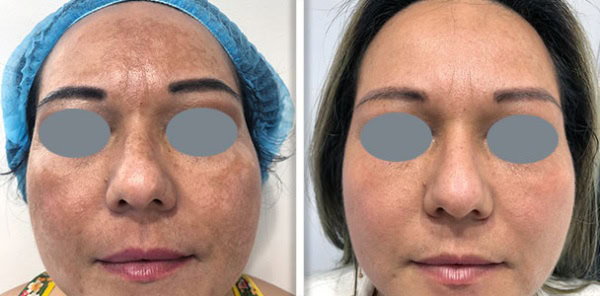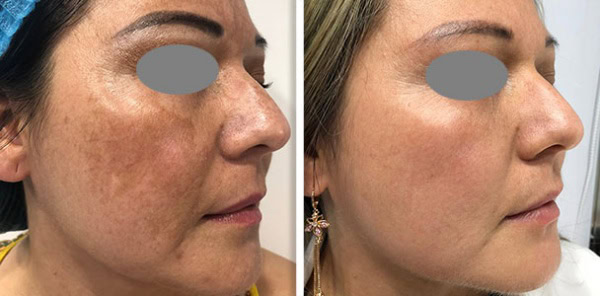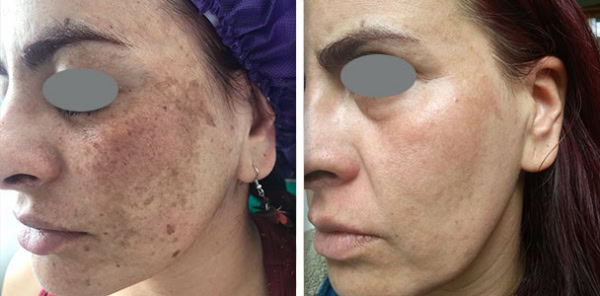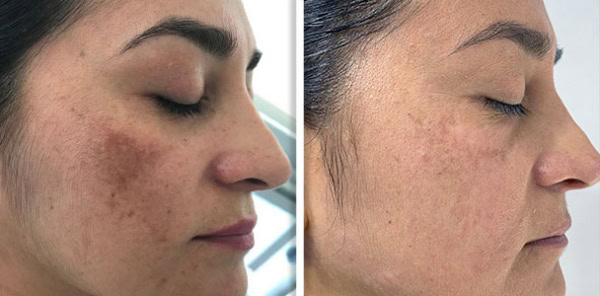



CO2 and ErYAG are both well-established technologies that can be used for skin resurfacing. Both lasers can remove controlled amounts of skin tissue but they do not interact with skin the same. The main difference comes from wavelength and water absorption. Conventional CO2 resurfacing uses a wavelength of around 10,600 nm, while Er:YAG operates at 2940 nm and is particularly strongly absorbed by water. That affects ablation, residual heat and how practitioners can approach resurfacing. But there’s more to the comparison than simply saying one laser is stronger than the other.
CO2 and Er:YAG are both water-targeting ablative lasers used for resurfacing, wrinkles and selected scars. CO2 generally produces a greater residual thermal effect alongside ablation, while 2940 nm Er:YAG allows very precise removal of water-rich tissue with less thermal spread when used in short-pulse ablative settings. Neither is automatically better. Treatment depth, fractional density, pulse characteristics, skin type, the condition being treated and the practitioner’s protocol can all affect results and recovery.
What Is the Difference Between CO2 and Er:YAG?
CO2 lasers commonly operate at 10,600 nm, while Er:YAG operates at 2940 nm. Both wavelengths target water, but Er:YAG is more strongly absorbed by water and can produce very precise ablation.CO2 generally leaves more residual thermal coagulation. The best choice depends on the required tissue effect rather than wavelength alone.
How Do CO2 and Er:YAG Lasers Work?
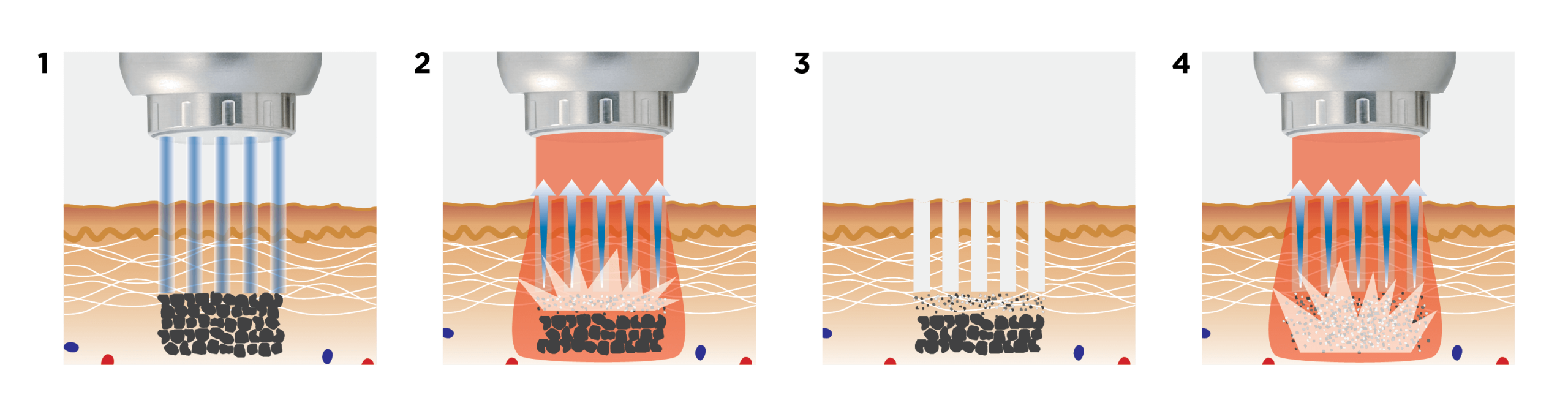
To understand the difference, it helps to understand what an ablative laser actually targets.Both technologies interact strongly with water, an important chromophore in skin. A chromophore is simply something within tissue that absorbs laser energy. When enough laser energy is absorbed by tissue water, rapid heating causes controlled vaporisation and removal of tissue. This is known as ablation. What happens around that ablated tissue is where CO2 and Er:YAG begin to behave differently.
How CO2 works
A conventional CO2 resurfacing laser operates at approximately 10,600 nm.Its energy is strongly absorbed by water, allowing tissue to be vaporised. Some energy also remains in the surrounding tissue as heat. This produces a zone of thermal coagulation around the ablated area. That thermal effect can contribute to the tissue response practitioners want from certain resurfacing procedures, but it can also influence redness, healing and complication risk.
How Er:YAG works
Er:YAG operates at 2940 nm. This wavelength coincides with particularly strong water absorption. The energy is therefore deposited very efficiently in water-rich superficial tissue.
With suitable short pulses, this allows very precise layer-by-layer ablation with relatively limited residual thermal injury. That doesn’t mean Er:YAG is always a low-heat or mild laser. Modern Er:YAG systems can alter pulse characteristics to change the balance between tissue removal and heating.You can’t reliably predict someone’s recovery simply from the words “CO2” or “Er:YAG”.
Is CO2 Stronger Than Er:YAG?
Not in the simple way this question is often presented online.CO2 is associated with greater residual heating, and historically it has been widely used for more aggressive resurfacing. Er:YAG is known for precise ablation with less residual thermal injury. But wavelength doesn’t determine the entire treatment.
The practitioner can change fluence, pulse duration, number of passes, treatment density and other parameters. Fractional treatment also behaves differently from treating the entire surface.Older comparative research provides an interesting example. When CO2 and Er:YAG were used to produce equivalent immediate tissue injury, researchers found equivalent healing and cosmetic improvement. So “stronger laser” isn’t necessarily the most useful question.
A better question is:
What tissue effect does this particular treatment need to produce?
Which Is Better for Wrinkles?
Both CO2 and Er:YAG have evidence supporting their use for facial wrinkles. A randomised split-face study comparing fractional CO2 with fractional Er:YAG found that both significantly reduced facial wrinkles, without an appreciable difference in clinical outcome between the two technologies.Another controlled study of peri-orbital wrinkles similarly found roughly equivalent improvement. This doesn’t mean the two lasers are identical. It means treatment parameters and clinical goals can be as important as the wavelength itself. For someone considering wrinkle treatment, the discussion should include how much resurfacing is planned, acceptable recovery, skin characteristics and whether another laser or non-laser approach may be more appropriate.
CO2 vs Er:YAG for Acne Scars
This comparison becomes more complicated with acne scarring because scars vary enormously. Rolling, boxcar and ice-pick scars don’t necessarily respond in the same way. Scar depth and tethering can also influence whether resurfacing alone is appropriate. A 2024 systematic review and meta-analysis comparing fractional CO2 with fractional Er:YAG for atrophic acne scars found that pooled efficacy favoured fractional CO2. CO2 is also linked to a greater intensity of pain and a longer lasting erythema.This is a useful example of why treatment choice involves trade-offs. The laser that produces the strongest response in a study isn’t automatically the best option for every patient.
Does Er:YAG Have Less Downtime?
It can, particularly when comparing relatively precise Er:YAG ablation with a treatment producing more residual thermal injury.But saying “Er:YAG always has less downtime” would be misleading. A light fractional or superficial Er:YAG procedure isn’t equivalent to deeper or more intensive Er:YAG resurfacing. CO2 procedures also vary substantially in depth and density.
Recovery can be influenced by:
- how deeply tissue is treated;
- whether treatment is fractional or full-field;
- treatment density;
- thermal coagulation;
- the number of passes;
- treatment area;
- individual healing response.
Patients should therefore ask about the specific protocol being proposed, rather than choosing treatment based on a generic downtime claim.
What Is the Difference Between Fractional and Full-Field Resurfacing?
This distinction is sometimes more useful than the laser name itself.
- Full-field resurfacing treats the entire skin surface within the selected area.
- Fractional resurfacing creates microscopic treatment zones while leaving areas of surrounding tissue untreated.
Those untreated areas can support the healing process. Fractional treatment isn’t automatically superficial, though. Fractional columns can be delivered at different depths and densities. This is another reason why comparing “fractional CO2” with “Er:YAG” without knowing how the Er:YAG is being delivered doesn’t tell you enough.
What About Darker Skin Types?
Skin colour needs careful consideration with resurfacing treatments. Post-inflammatory hyperpigmentation, where treated skin becomes darker during healing, is an important concern after procedures that create significant inflammation. People with more melanin-rich skin can have a greater tendency to develop pigmentary changes after skin injury.
That doesn’t mean a particular skin tone automatically rules out laser treatment.It means wavelength, treatment intensity, diagnosis, previous pigmentation problems and practitioner experience need to be considered carefully. Claims that one ablative laser is simply “safe for every skin type” should therefore be treated cautiously.
What Are the Risks of Ablative Laser Resurfacing?
Both technologies create controlled tissue injury, so neither should be presented as risk-free. Depending on treatment depth and individual factors, possible effects and complications can include redness, swelling, discomfort, crusting, pigment changes and infection. Scarring is a less common but important potential complication. Certain medical conditions, active skin problems and medicines may also affect suitability. Appropriate consultation, patient selection, eye protection, equipment controls and practitioner training are essential parts of laser treatment.
Where Does Fotona Er Fit?
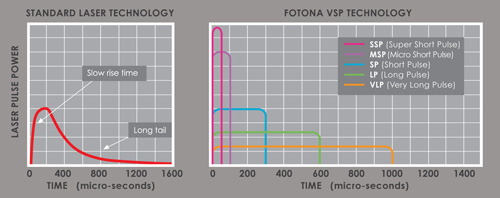
Fotona uses 2940 nm ER across relevant aesthetic and dermatological platforms. An important distinction is Fotona’s VSP — Variable Square Pulse — technology. Rather than treating Er as having one fixed tissue effect, VSP allows pulse duration to be varied according to the application.
Why does that matter?
Shorter ablative pulses can favour precise tissue removal with limited residual heating, while changing pulse characteristics allows the balance between ablation and thermal effects to be altered. Fotona’s skin-resurfacing technology can also support both fractional and full-field approaches on appropriate systems. This is why describing modern Er simply as a “gentle alternative to CO2” misses much of what the technology can do.
Why Does Fotona Combine Er With Nd?
Platforms such as Fotona SP Dynamis combine 2940 nm Er with 1064 nm Nd. The two wavelengths serve different purposes. Er is highly suited to precise interactions with water-rich superficial tissue. Nd penetrates more deeply and can create thermal effects without ablating the skin surface in the same way. This gives practitioners access to complementary tissue interactions rather than relying on one resurfacing wavelength for every treatment goal. The combination is relevant to Fotona treatments and protocols that work at different tissue depths, including selected approaches to facial rejuvenation and scar treatment.
What Should Patients Ask Before Choosing a Laser?
Don’t choose treatment solely because a clinic advertises CO2 or Er.Ask what the practitioner is actually trying to achieve. Find out whether the proposed treatment is fractional or full-field, how intensive it is expected to be and why that approach suits your skin concern. It is also reasonable to ask about expected recovery, possible pigment changes, alternatives and what happens if your skin doesn’t respond as expected. For clinic owners comparing equipment, the questions are different. Consider the range of tissue effects and applications you need, training requirements, safety arrangements and whether a single-purpose resurfacing system or a multi-application platform better fits your treatment menu.
CO2 or Er:YAG: Which Should You Choose?
There isn’t a universal winner. CO2 offers ablation with a relatively strong residual thermal component. Er provides particularly efficient water absorption and precise ablation, with modern systems allowing considerable control over the relationship between tissue removal and heat.
For wrinkles and scars, both technologies have clinical evidence behind them. The correct choice depends on the problem being treated, the desired tissue effect, skin characteristics and the recovery a patient is prepared to accept.
- The device matters.
- The settings matter.
- And the person operating it matters too.
FAQs
Is Er better than CO2 laser?
Not universally. Er offers very precise water-targeted ablation and can limit residual thermal injury at appropriate settings. CO2 provides more thermal coagulation alongside ablation. Which is preferable depends on the treatment goal, skin, treatment parameters and acceptable recovery.
Is CO2 or Er better for acne scars?
Both are used for atrophic acne scars. A meta-analysis conducted in 2024 found that fractional CO2 was more effective, but also caused greater pain and erythema. Scar depth and type are also important, and some scars may require more than just laser resurfacing.
Which has less downtime, CO2 or Er?
Er is often associated with faster recovery because it can produce precise ablation with less residual thermal injury. However, downtime isn’t determined by wavelength alone. Treatment depth, density, pulse characteristics and whether treatment is fractional or full-field all influence recovery.
What wavelength is an Er laser?
Er operates at 2940 nm. This wavelength is particularly strongly absorbed by water, making it useful for precise ablation of water-rich tissue. Fotona uses 2940 nm Er in relevant aesthetic and dermatological systems.
Can Er and Nd be used together?
Yes. Some Fotona platforms combine 2940 nm Er with 1064 nm Nd. Er provides highly water-selective superficial tissue interaction, while Nd can reach deeper structures and produce non-ablative thermal effects. The treatment protocol will determine the wavelength or combinations that are most appropriate.
Considering laser technology for your clinic?
Fotona UK can provide further information about Er and dual-wavelength Fotona systems, including how different platforms fit particular treatment requirements.