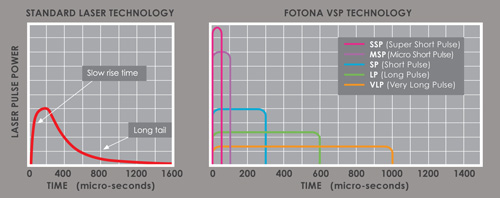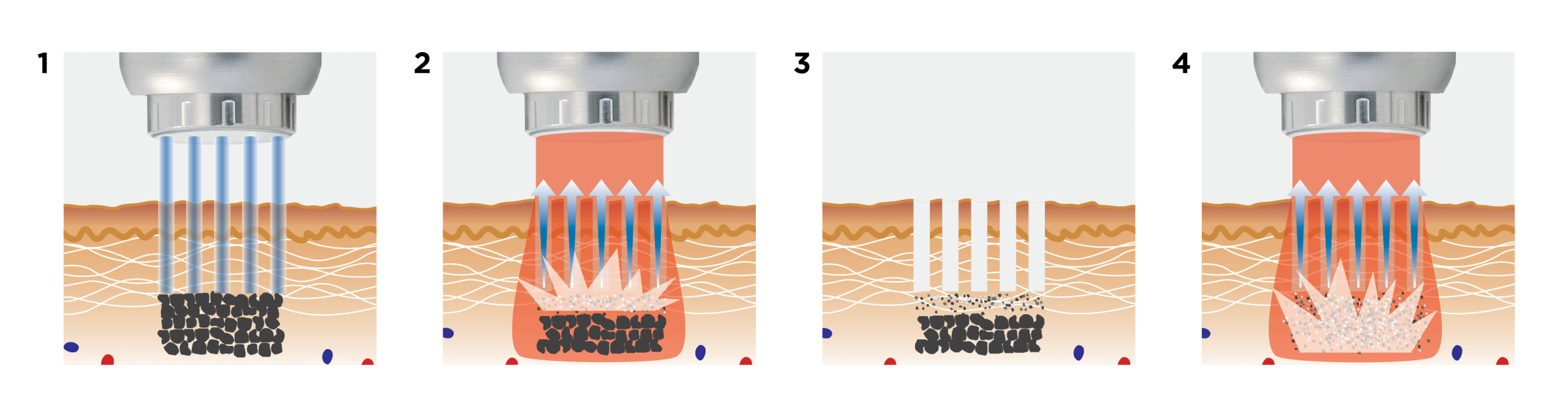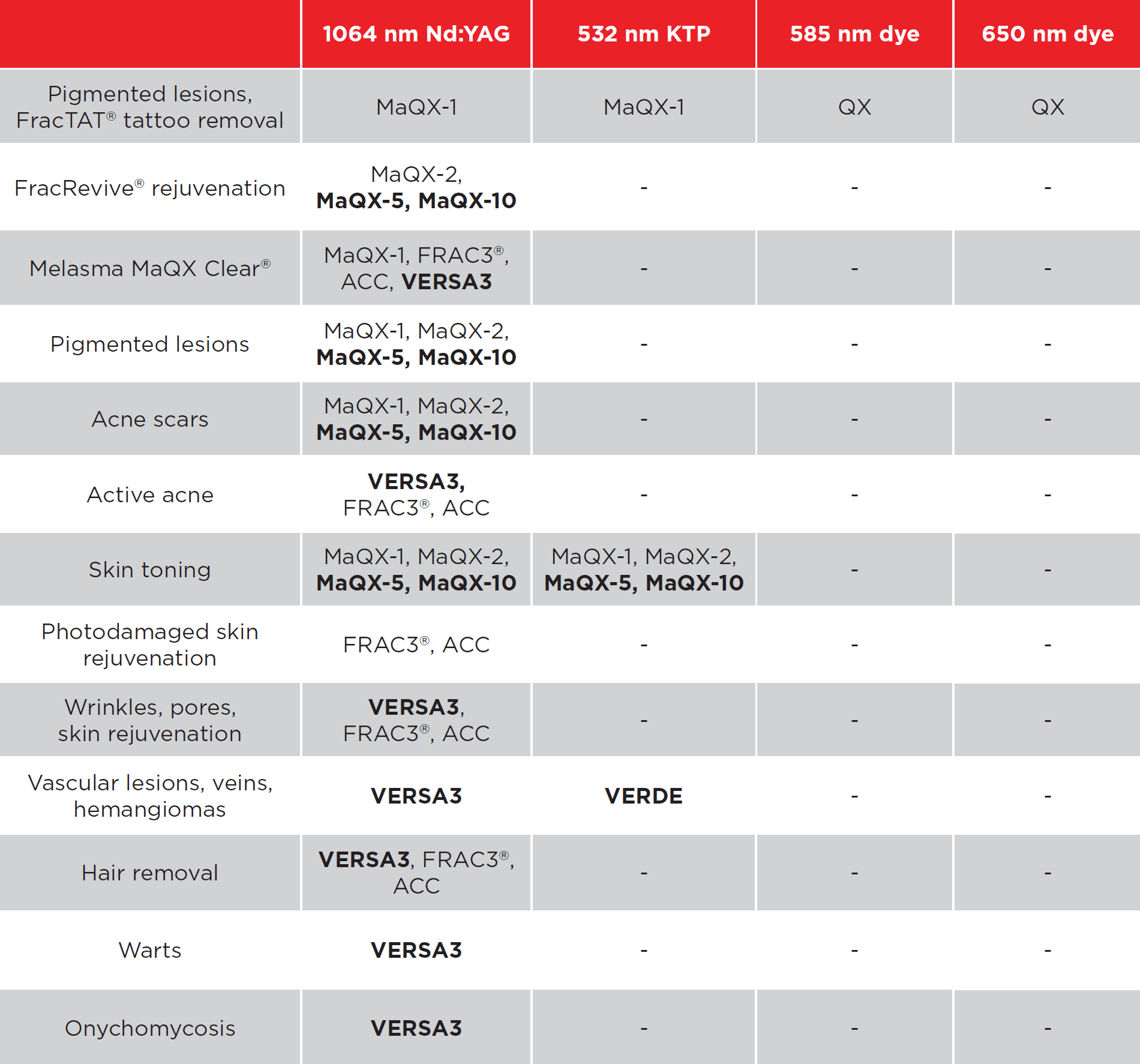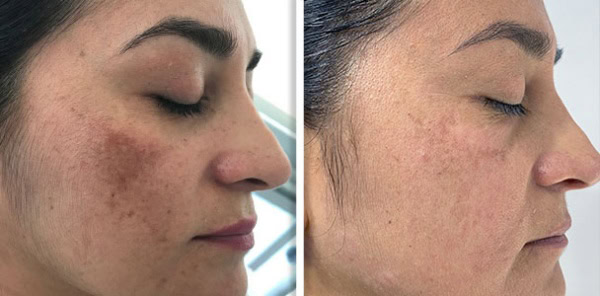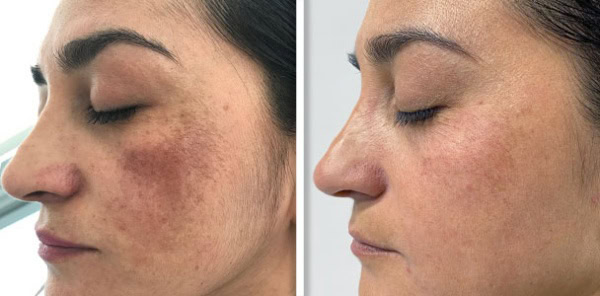


The Fotona dual wavelength laser enables treatment of both superficial and deep skin layers. It uses two wavelengths of laser energy to combine the effects of the Er wave (superficial) with the heating properties of the Nd wave.
This can be used for skin rejuvenation, skin resurfacing, scar revision and some body contouring procedures. It gives practitioners more ways to address different concerns, sometimes within the same treatment.
But what makes these wavelengths different, and does combining them offer a clinical advantage? Understanding the interaction with tissue will help identify where this technology can be a useful tool and where it can be limited.
TL;DR
Fotona systems offer two wavelengths of laser: 2940nm (Er) and 1064nm (Nd). The 2940nm Er is highly absorbed by water and provides precise surface effects. The 1064nm Nd can provide deeper thermal effects.The combination supports treatments such as Fotona4D, TwinLight resurfacing and TightSculpting. Clinical research suggests that combined treatment may improve certain facial ageing concerns more than either wavelength alone.However, two wavelengths aren’t better for every patient.
Treatment results, recovery and safety depend on the skin condition, laser settings and practitioner experience.
Quick Answer
The key advantage of using the Fotona dual wavelength laser is that it can treat various tissue depths and targets. The Er laser (2940 nm) is used to allow controlled ablation and heating of tissue whereas the deeper thermal effects are achieved using the Nd laser (1064 nm). Together, they can support skin rejuvenation, tightening and scar treatments, although individual results vary.
What Is Fotona Dual-Wavelength Laser Technology?
Dual wavelength technology allows two different laser sources to be used.Fotona uses an Er and Nd laser to deliver different interactions with the skin tissue. Each wavelength has its own benefits, and can therefore be used in combination with each other for certain treatment protocols.
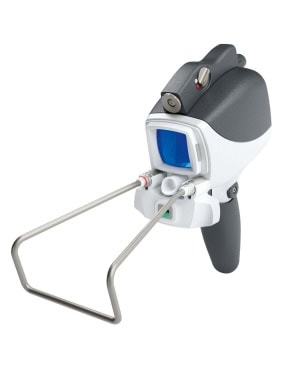
The Fotona SP Dynamis laser system can deliver both wavelengths for a variety of aesthetic and dermatological treatments.This means the practitioner can choose the best type of wavelength and treatment for the particular tissue they are working with.
How Do the Two Fotona Laser Wavelengths Work?
Er at 2940 nm: Precise Surface Treatment
Er energy is strongly absorbed by water, which is present throughout human skin.
This makes it suitable for controlled tissue ablation, where very thin layers of the skin are removed. Practitioners can use it to improve certain superficial irregularities, including fine lines and uneven skin texture.Er can also be delivered in non-ablative modes that heat tissue without deliberately removing its surface.
The effect depends on the pulse settings and treatment technique. The wavelength alone doesn’t determine how intensive a procedure will be.
Nd at 1064 nm: Deeper Tissue Heating
Nd has different absorption characteristics and can penetrate deeper into the skin.
It offers controlled heating of the dermis, collagen remodelling and targeting specific structures such as blood vessels and hair follicles depending on the settings.
Collagen is a structural protein, therefore heating can cause changes to the collagen and surrounding tissue which can improve skin tightness over time.
Unlike superficial Er resurfacing, many Nd treatments aim to preserve the outer skin surface.
What Are the Clinical Benefits of Combining Both Wavelengths?
1. Treatment of Different Skin Layers
Skin ageing doesn’t happen at one depth. Fine surface lines, uneven texture and loss of firmness involve different structures.A combined protocol allows the practitioner to address surface quality with Er and deeper tissue changes with Nd.
This can be useful when a patient has several concerns that cannot be fully addressed by one superficial treatment.
2. Improved Skin Texture and Firmness
Combining resurfacing with controlled deeper heating may improve both skin texture and firmness.Er can remove damaged superficial tissue, while Nd supports deeper thermal remodelling.
The approach is used in Fotona4D facial rejuvenation, which combines different modes to address several aspects of facial ageing.However, improvements are usually gradual and should not be compared directly with the results of a surgical facelift.
3. More Options for Scar Treatment
Different scars require different approaches.
Shallow scars can be improved with fractional resurfacing. Deeper or vascular scars may need other tissue properties addressed.A mixture of ablative and non-ablative treatments can help to offer more options for improving texture.
The best option will depend on the type and depth of scar, skin tone and risk of pigmentation.
4. Increased Flexibility
Dual wavelength technology can be used to help treat a range of treatment types without needing separate laser platforms.This however should not be confused with good training. Each treatment needs suitable handpieces, settings, assessment procedures and clinical knowledge.
What Does Clinical Research Say?
A 2021 randomised split-face trial published in Dermatologic Surgery studied 20 patients receiving facial rejuvenation treatment.Using both 2940 nm Er and 1064 nm Nd together was found to give better improvements on a number of skin properties.
A second prospective study published in December 2025 looked at 13 females undergoing dual wavelength skin tightening. There were improvements in specific areas of the face. Reductions in wrinkling and improvement in pore appearance.
This therefore supports the idea that using multiple wavelengths could be beneficial however the sample sizes were small.It does not prove that using multiple wavelengths will always give better results or that results will be the same in different skin types and conditions.
How Does Fotona Dual-Wavelength Treatment Compare With Single-Wavelength Lasers?
A single-wavelength laser can be entirely appropriate when the treatment goal is specific.For example, Er alone may be selected for precise superficial resurfacing. Nd alone may be suitable for certain vascular or hair-reduction procedures.
Combining both becomes more relevant when the practitioner wants to address different tissue characteristics during a planned treatment.Fotona’s TwinLight skin resurfacing is one example. It combines non-ablative Nd treatment with fractional Er resurfacing.
The important question isn’t simply whether two wavelengths are available. It’s whether using both offers a clear advantage for the patient’s condition.
Are There Risks or Limitations?
Dual wavelength laser treatment may not be suitable for all.Some common side effects include redness, swelling, soreness, changes in pigmentation and occasionally burning, infection or scarring.
The risks will depend on the area being treated, skin type, pulse settings and whether the top layer of skin is ablated.People with darker skin tones may have a greater risk of post-inflammatory pigmentation changes after certain laser procedures. Careful assessment and conservative treatment planning are particularly important.
Active infections, suspicious skin lesions and some medical conditions may also require assessment or treatment before a cosmetic laser procedure.Using two wavelengths does not automatically reduce these risks.
What Should Patients Expect During Treatment?
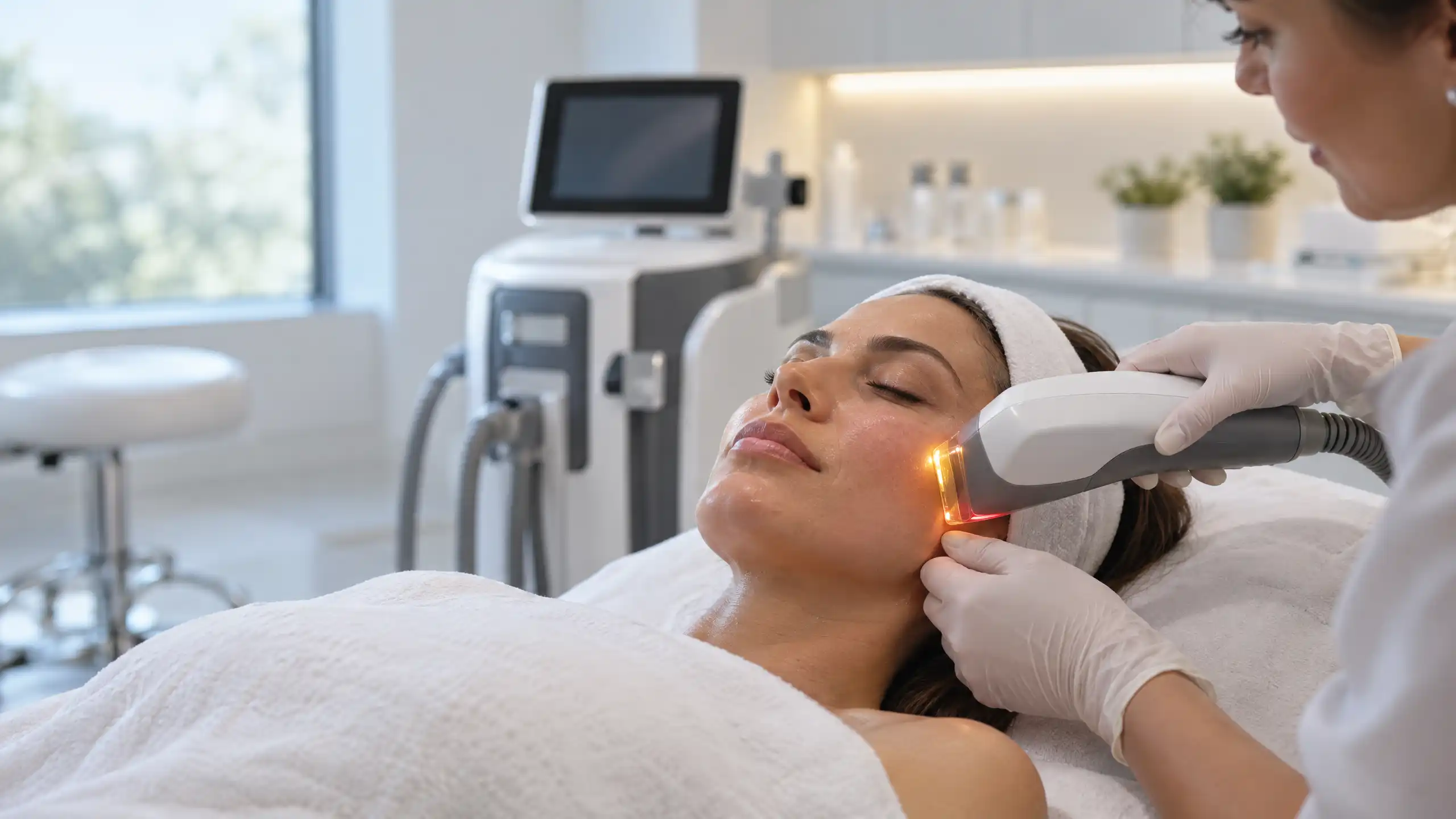
The experience depends on the procedure being performed.Non-ablative treatments can cause a warm feeling. Resurfacing can cause more discomfort and temporary sensitivity.
Recovery time will depend on the treatment. Light treatments can have minimal disruption, however more aggressive ablative resurfacing can cause peeling, redness and longer healing time.
The number of treatments will depend on the skin concern, how aggressive the treatment is and how your skin reacts.Before treatment, the practitioner should explain preparation, protective eyewear, possible side effects and aftercare.
What Should UK Clinics Consider Before Choosing a Dual-Wavelength System?
For clinic owners, treatment capability is only one part of the decision.The system should match the clinic’s patient needs, intended procedures, practitioner qualifications and available safety arrangements.Fotona has various modes and accessories available. Clinics should ensure that the configuration they are using can be used for their intended applications.
The Medicines and Healthcare products Regulatory Agency in the UK provides guidance on the safe use of lasers. Clinics should also ensure they are aware of any licensing and registration requirements in their area.Choosing a suitable platform should involve clinical evidence, training, equipment support and realistic expectations rather than the number of available treatments alone.
Final Thoughts
Fotona dual-wavelength laser technology offers a practical clinical advantage: different laser-tissue effects can be combined within a single treatment platform.
Er supports precise surface treatment, while Nd provides options for deeper thermal effects. Together, they may help practitioners address skin concerns that involve more than one tissue layer.The best results depend on selecting the right protocol for the right patient.
UK practitioners comparing dual-wavelength systems can speak with Fotona UK about available platforms, training and clinical applications.
Frequently Asked Questions
1. Is a Dual-Wavelength Laser Better Than a Single-Wavelength Laser?
Not always. Dual wavelength can be useful if superficial and deeper tissue effects are required. A clinical trial was conducted in 2021 which showed positive results for facial rejuvenation when using a combination of Er and Nd wavelengths. However, this does not mean that it is always the best option. Some concerns can be treated with single wavelength therapy.
2. Can Fotona Dual-Wavelength Lasers be used to treat acne scars?
Yes, specific Fotona dual wavelength protocols can be used. Er can be used to improve skin texture and help with irregularities whilst Nd can cause deeper thermal affects. This will depend on the type and depth of scarring. Deep ice pick scars may require a different or combination approach. It is best to have an assessment of the scars by a practitioner to see if a laser would be suitable.
3. Does Fotona Dual-Wavelength Treatment Have Downtime?
Depending on the type and intensity of the procedure, there will be some downtime. Non-ablative treatments may cause minor redness and a warm sensation. Ablative Er resurfacing can cause more pronounced peeling and sensitivity with increased downtime. Skin type, depth and response will also affect the downtime. Aftercare should be given to patients based on the actual protocol used. Not all dual wavelength treatments will have minimal downtime.
4. Are Fotona Dual-Wavelength Lasers Suitable for darker skin tones?
Some treatments can be used on darker skin tones but care must be taken when choosing the treatment. Melanin can increase the risk of pigmentation changes after certain laser treatments and aggressive resurfacing treatments. A practitioner experienced in treating darker skin should assess the treatment area, intended wavelength, settings and relevant medical history. No laser platform should be assumed safe for every skin tone or indication.
5. Which Fotona Machines Use Dual-Wavelength Technology?
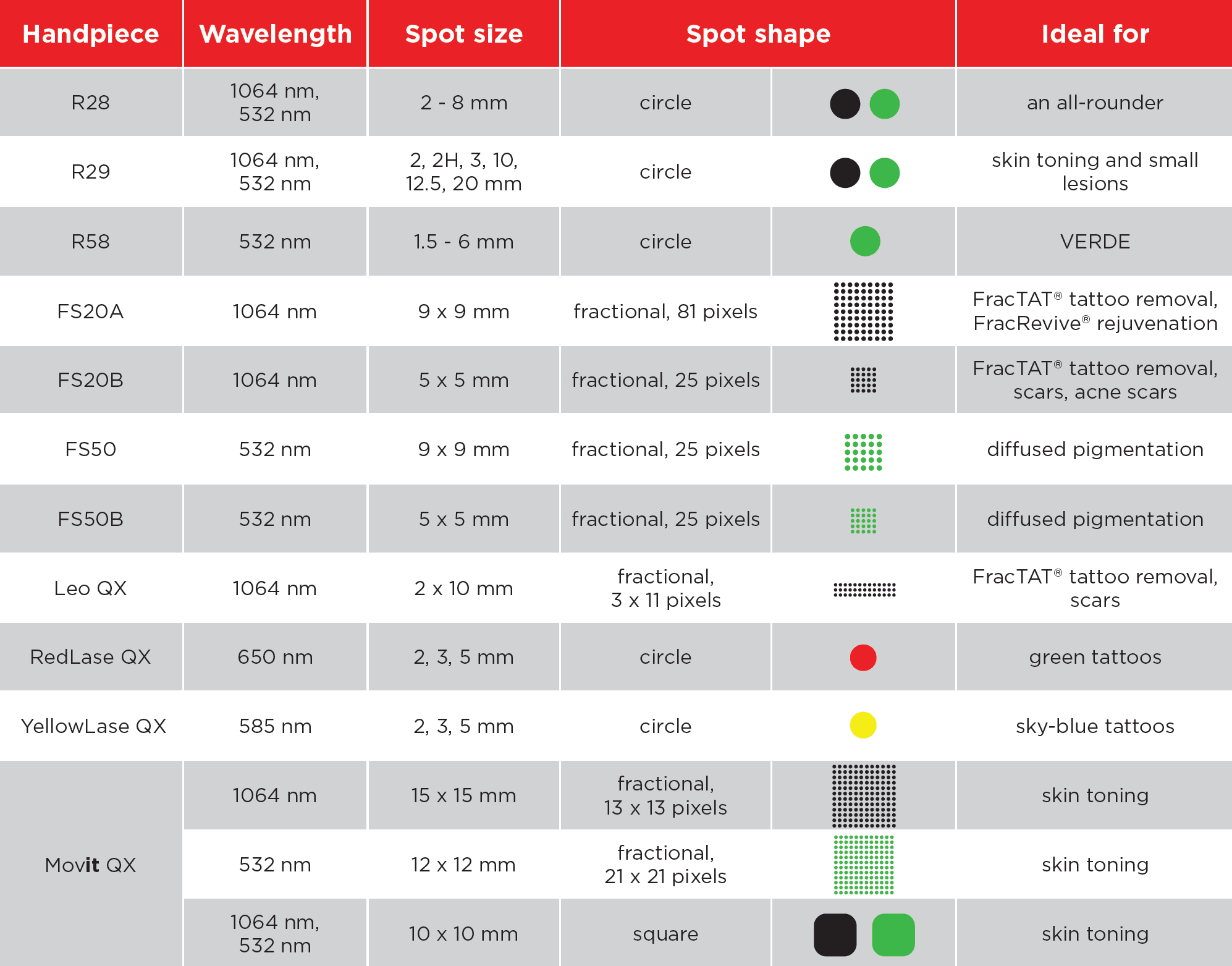
Fotona’s dual-wavelength aesthetic platforms include the SP Dynamis family and TimeWalker Fotona4D systems. They combine 2940 nm Er and 1064 nm Nd laser sources for selected clinical and aesthetic applications. However, treatment availability depends on the exact system configuration, accessories and practitioner training. Clinics should verify which procedures a particular device supports before purchasing or offering them to patients.