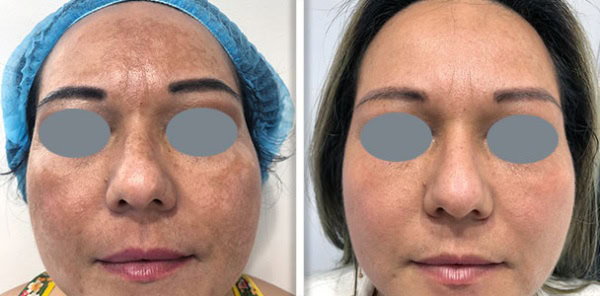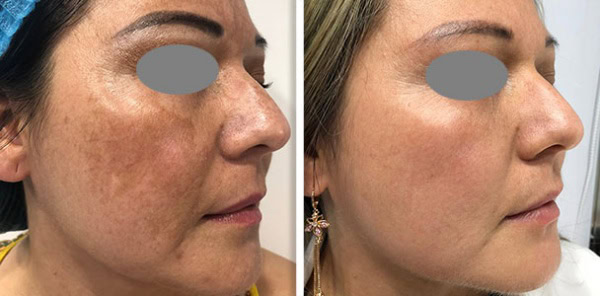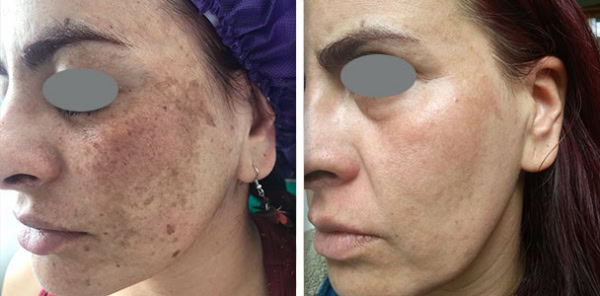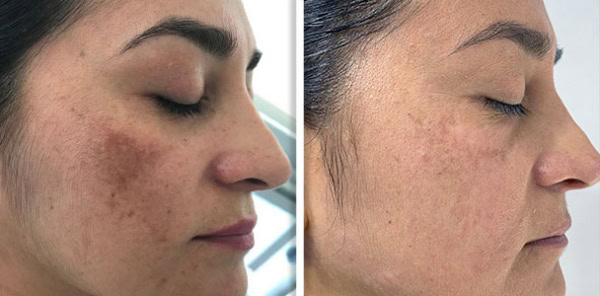


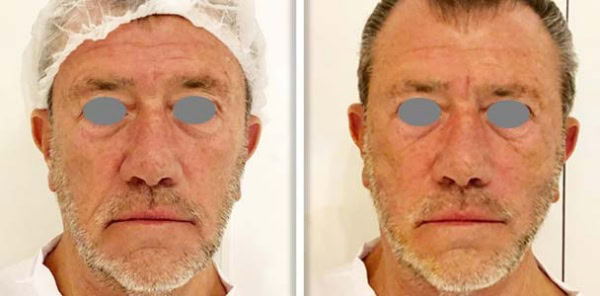
If you’re considering a Fotona4D treatment, you may be wondering about the part that before-and-after photographs don’t show: what does the treatment actually feel like?
Fotona describes Fotona4D as a non-invasive laser facial treatment that generally doesn’t require anaesthesia. That doesn’t mean every person will feel nothing. Warmth, heat, tingling or brief sensitivity may be noticed depending on the treatment stage, settings and your individual sensitivity. Understanding its four stages makes the experience much easier to picture. Fotona4D isn’t generally designed to be a highly painful treatment, but it isn’t accurate to promise that it will be completely painless for everyone. The four stages use different laser modes and work at different tissue levels, so they can feel different.
You may notice warmth during the intraoral SmoothLiftin stage, sharper or warmer sensations during some external passes, deeper heat during PIANO and sensitivity during the final superficial Er:YAG stage. Your experience depends on treatment settings, area treated and personal sensitivity. Fotona states that Fotona4D generally doesn’t require anaesthesia, but your practitioner should discuss comfort and treatment intensity before starting.
Quick Answer: Is Fotona4D Painful?
Fotona4D is generally designed to be performed without anaesthesia, and official Fotona information describes it as typically painless. However, individual experiences vary. Because Fotona4D combines four different Er:YAG and Nd:YAG treatment stages, you may experience warmth, heat, tingling or temporary sensitivity rather than the same sensation throughout the procedure.
What Is Fotona4D?
Fotona4D is a non-surgical facial rejuvenation protocol that combines 2940 nm Er:YAG and 1064 nm Nd:YAG laser wavelengths.
Instead of performing one type of laser treatment across the face, the protocol combines four stages:
- SmoothLiftin – intraoral Er:YAG treatment
- FRAC3 – fractional Nd:YAG treatment
- PIANO – deeper Nd:YAG bulk heating
- SupErficial – controlled superficial Er:YAG treatment
Each creates a different tissue effect. That’s also why asking whether “Fotona4D hurts” doesn’t have one universal answer. The sensation during an intraoral non-ablative treatment isn’t necessarily the same as the sensation from a superficial external laser pass.
Why Can Fotona4D Feel Different at Each Stage?
Laser wavelength is only part of the story. Treatment sensation can also be affected by energy settings, pulse duration, treatment area, number of passes, tissue response and your own sensitivity.This is an important point that’s often missed when laser treatments are described simply as painful or painless.
The same laser wavelength can produce different tissue effects when delivered using different pulse structures and parameters. Fotona’s Er:YAG, for example, can be used non-ablatively in SMOOTH mode or for controlled superficial ablation. So, what might you actually feel?
What Does SmoothLiftin Feel Like?
SmoothLiftin is the first stage of Fotona4D and is performed inside the mouth. It uses Fotona’s Er:YAG SMOOTH mode. Rather than ablating the tissue, the mode creates a controlled thermal effect while preserving the surface. Fotona describes this stage as controlled, gentle heating intended to stimulate collagen contraction and remodelling.
For the patient, this means the sensation is more likely to be associated with warmth or heat than with the feeling people may associate with an ablative laser procedure. The practitioner works systematically inside the mouth, so some areas may naturally feel more sensitive than others.If something feels excessively uncomfortable, you should tell the practitioner rather than assuming you need to tolerate it.
What Does the FRAC3 Stage Feel Like?
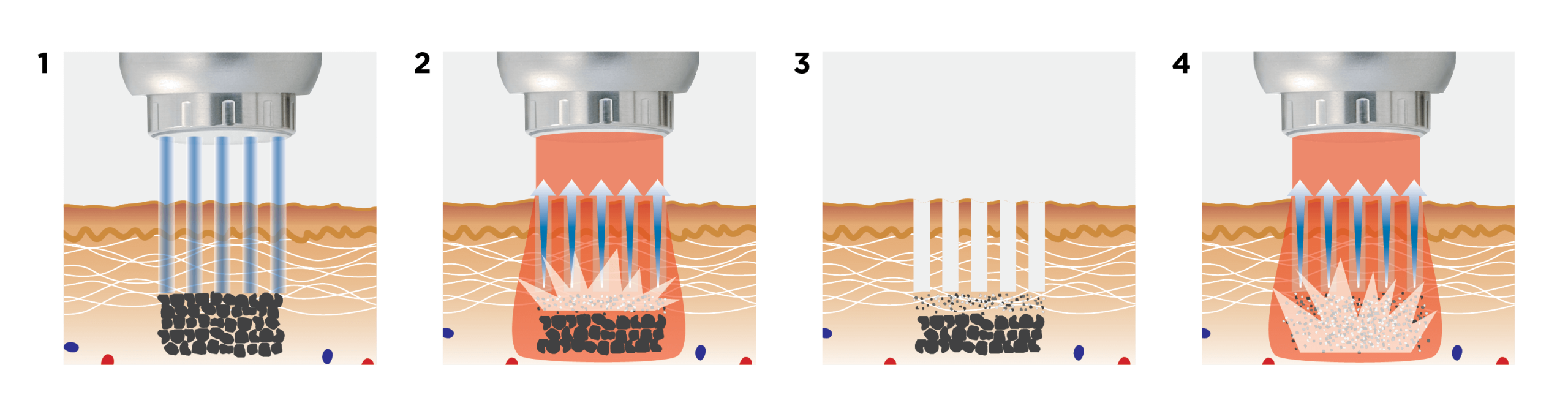
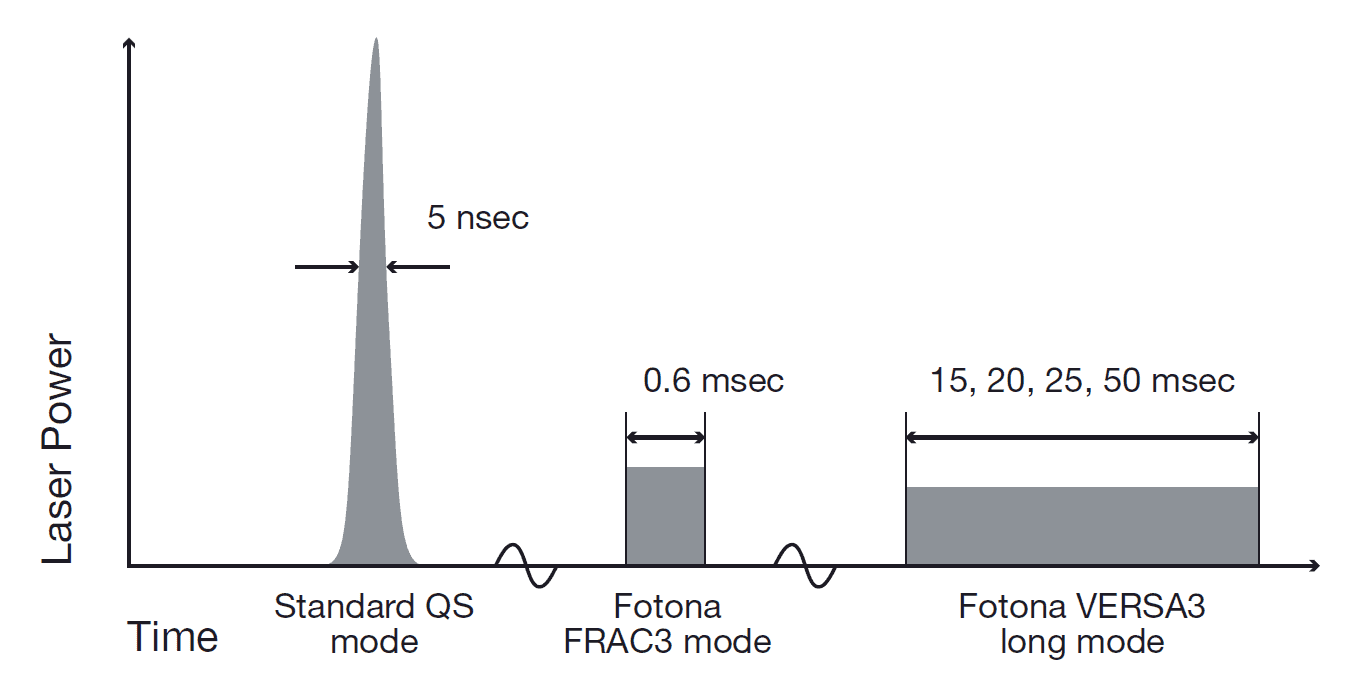
The second stage uses 1064 nm Nd:YAG in FRAC3 mode. Fotona describes FRAC3 as a non-ablative fractional treatment designed to create small, three-dimensional thermal treatment zones within tissue. The skin surface isn’t being removed in the same way as conventional ablative resurfacing. Fotona
Patients may therefore notice brief heat, tingling or sharper moments as the laser moves across different areas.Again, there isn’t a reliable universal pain score for Fotona4D. Sensation depends partly on the parameters selected and the area being treated.
What Does PIANO Mode Feel Like?
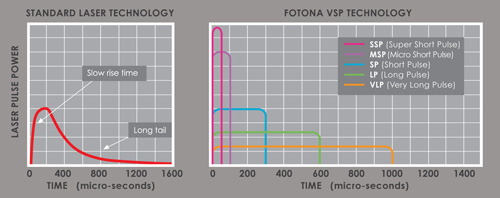
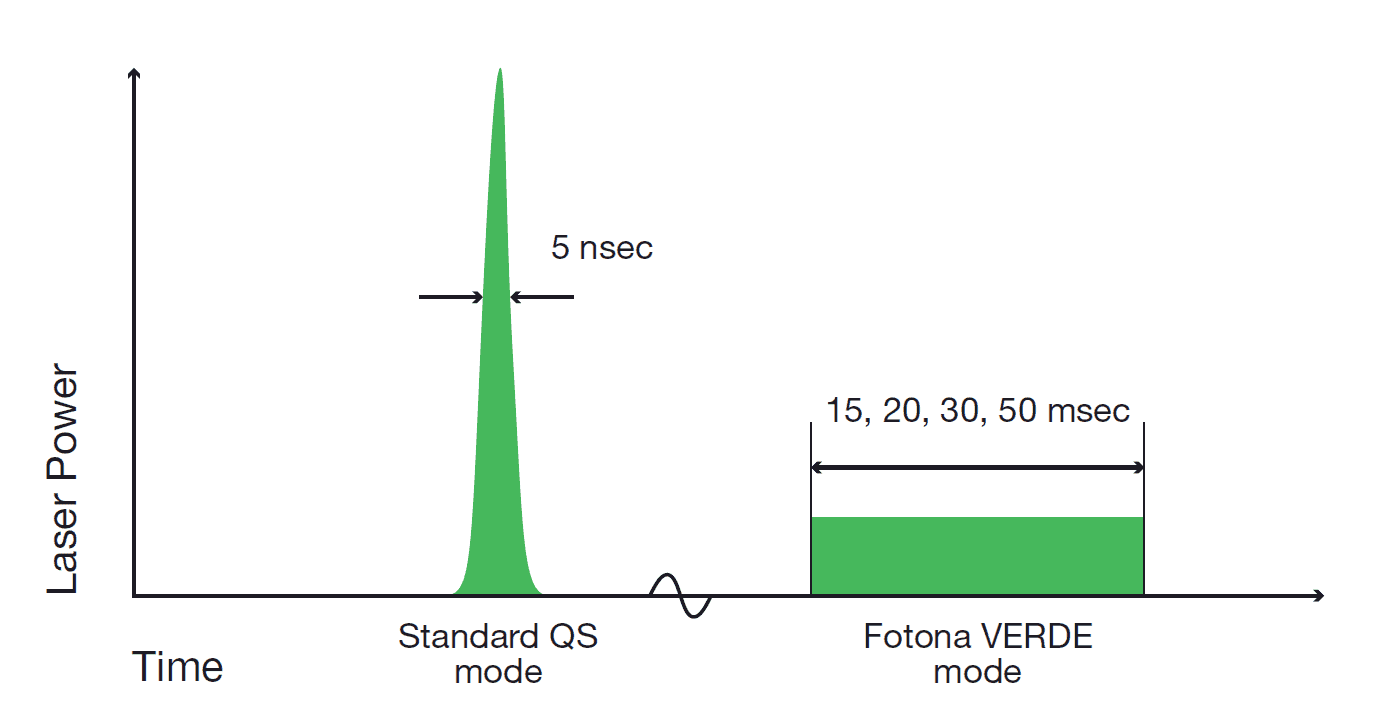
The PIANO stage is particularly associated with heat. PIANO uses a very long Nd:YAG pulse to create controlled bulk heating through a larger volume of tissue. Fotona explains that this extended pulse structure avoids the high initial temperature peaks associated with shorter pulses while producing homogeneous dermal heating.In practical terms, you may feel warmth building as the practitioner moves the handpiece across the treatment area.Warmth is part of the intended thermal process, but the practitioner should still monitor the skin and your comfort throughout treatment. Feeling heat and experiencing harmful overheating aren’t the same thing. Treatment parameters and technique matter.
What Does the SupErficial Stage Feel Like?
The fourth stage works much closer to the surface. SupErficial uses Er:YAG for a controlled light peel. Because Er:YAG energy at 2940 nm is strongly absorbed by water in tissue, it can be used for precise superficial ablation. The experience can therefore differ from the deeper heating stages. Some people may notice warmth, prickling or sensitivity as the laser passes over the skin. How noticeable this feels depends partly on how the superficial stage is configured.This distinction is particularly important when reading about Er:YAG online. Research involving more intensive Er:YAG resurfacing has reported discomfort and post-treatment pain. Those procedures shouldn’t automatically be treated as equivalent to Fotona4D’s light superficial finishing stage.
Does Fotona4D Require Anaesthetic?
Official Fotona material states that Fotona4D can generally be performed without anaesthesia.That should be read as a description of the protocol rather than a promise that nobody will find it uncomfortable.
Pain tolerance varies considerably between people. Treatment settings and the exact protocol can also change the experience.More broadly, dermatological laser research confirms that discomfort is a recognised issue across laser procedures and that topical anaesthetics and other comfort measures are sometimes used depending on the procedure. However, findings from other laser procedures shouldn’t be used to claim that Fotona4D routinely needs pain relief.Your practitioner can explain their approach during consultation.
What Happens Before the Treatment?
A good Fotona4D experience starts before the laser is switched on. Your practitioner should assess your skin, concerns and relevant medical history and decide whether the treatment is appropriate. They can also explain which areas will be treated and what sensations you may notice.This is the right time to mention previous reactions to aesthetic procedures, unusually sensitive skin or concerns about discomfort. The treatment should also be explained realistically. Fotona4D is a non-surgical facial rejuvenation treatment; it isn’t the same procedure as a surgical facelift and shouldn’t be expected to reproduce surgical tissue repositioning.
What Might Your Skin Feel Like Afterwards?
Your immediate experience depends partly on how your treatment has been performed. Temporary warmth, redness, sensitivity or mild swelling can occur with laser procedures. The final superficial stage may also influence how the skin looks and feels afterwards.Avoid assuming that every Fotona4D treatment has exactly the same recovery because treatment intensity matters. Fotona describes its standard Fotona4D protocol as having little or no downtime. Follow the aftercare instructions given by your treating practitioner rather than relying on a generic recovery timetable found online.
Is Fotona4D Less Painful Than Laser Resurfacing?
Often these aren’t like-for-like treatments.Traditional ablative laser resurfacing deliberately removes controlled layers of skin and can be considerably more intensive. Research on Er:YAG resurfacing has documented pain, redness, swelling and recovery after treatment.
Much of Fotona4D, by contrast, relies on non-ablative thermal modes, followed by a lighter superficial Er:YAG stage.That doesn’t justify promising that Fotona4D will always hurt less. Treatment intensity and individual response still matter. But it does explain why pain reports from aggressive full-field resurfacing shouldn’t simply be applied to the standard Fotona4D protocol.
Does More Pain Mean the Treatment Is Working Better?
No.This is an important misconception.A more painful laser treatment isn’t automatically a more successful treatment.Laser effects depend on the interaction between wavelength, pulse duration, energy, target tissue and treatment technique. The aim is to create the intended tissue response while managing unnecessary injury and risk. This also means that asking a practitioner to “turn it up” simply because a treatment feels comfortable isn’t a sensible way to judge treatment quality. The correct endpoint depends on the protocol and patient.
Who May Need Extra Consideration Before Fotona4D?
Not everyone who wants facial rejuvenation will automatically be suitable for the same laser protocol.Medical history, current skin condition, active infection, certain medicines, previous procedures and other individual factors can affect treatment planning.
Pigmentation and skin type also deserve careful assessment with laser procedures because unwanted pigmentary changes can occur following some forms of laser treatment. If you have a new, changing or suspicious skin lesion, unexplained pigmentation, active infection or another unresolved medical concern, appropriate medical assessment should come before cosmetic laser treatment.
What Are the Risks of Fotona4D?
“Non-surgical” doesn’t mean risk-free.Laser treatments can produce unwanted effects such as redness, swelling, discomfort, changes in pigmentation and, depending on treatment type and intensity, burns, infection or scarring.
The risk profile isn’t identical across every Fotona4D stage because the tissue effects aren’t identical.Appropriate patient selection, laser parameters, practitioner training, eye protection and aftercare all matter.This is another reason to choose treatment based on a proper assessment rather than simply deciding from before-and-after photographs.
How Does Fotona Technology Fit In?
Fotona4D uses the complementary properties of Er:YAG and Nd:YAG. The 2940 nm Er:YAG wavelength can be used for both non-ablative SMOOTH treatment and precise superficial treatment. The 1064 nm Nd:YAG wavelength supports deeper non-ablative thermal stages such as FRAC3 and PIANO.This multi-stage approach is also used as the foundation for related facial treatments. SmoothEye focuses on the periocular region, while LipLase applies non-invasive Er:YAG treatment around the lips. These are related protocols rather than proof that one treatment is appropriate for every facial concern.
What Should You Ask at Your Consultation?
Instead of asking only, “Will it hurt?”, ask what treatment settings and stages are planned for you.Find out why you’re considered suitable, what sensations are expected, whether the clinic uses any comfort measures, what skin response is normal afterwards and who to contact if you experience an unexpected reaction.You should also understand what the treatment can realistically improve.A practitioner who explains limitations as clearly as benefits gives you more useful information for deciding whether treatment suits you.
Conclusion
So, is Fotona4D painful?For many patients, the treatment is intended to be tolerable without anesthesia, and Fotona describes the standard procedure as typically painless. But “painless” shouldn’t be treated as a guarantee. You may notice different sensations as the treatment moves from intraoral Er:YAG heating to Nd:YAG thermal stages and finally superficial Er:YAG treatment. Settings, treatment area and individual sensitivity all influence what you feel.A consultation is therefore the best place to discuss both comfort and realistic treatment expectations. If you’re considering Fotona4D in the UK, speak to a suitably trained practitioner about your skin, goals and the exact protocol they recommend.
Frequently Asked Questions
- Does Fotona4D hurt inside the mouth?
SmoothLiftin uses non-ablative Er:YAG energy inside the mouth and is designed to create controlled heating rather than remove the tissue surface. You may notice warmth or heat during this stage. Individual sensitivity varies, so tell your practitioner if the sensation becomes uncomfortable.
- Do I need numbing cream before Fotona4D?
Fotona’s standard Fotona4D information states that the procedure generally doesn’t require anaesthesia. Whether any comfort measure is appropriate depends on the planned protocol and the treating practitioner. Don’t apply numbing products yourself before treatment unless your clinic has specifically advised you to do so. Fotona
- How long does Fotona4D discomfort last?
There isn’t one reliable duration that applies to everybody. Sensitivity depends on treatment settings, the areas treated and individual response. Any expected immediate skin reaction and aftercare should be explained by your practitioner. Contact the clinic if pain or another reaction is more severe or persistent than they told you to expect.
- Does the Fotona4D laser feel hot?
Some stages can feel warm because controlled heating is part of their intended action. PIANO, for example, uses Nd:YAG to create bulk dermal heating, while SmoothLiftin produces a thermal effect with Er:YAG SMOOTH mode. The sensation shouldn’t be used by the patient as a measure of whether enough energy is being delivered. Fotona
- Is Fotona4D more painful than a surgical facelift?
They aren’t directly comparable experiences. Fotona4D is a non-surgical laser procedure, whereas a traditional facelift is an operation involving incisions and surgical repositioning of tissues. Pain during a laser appointment shouldn’t be compared directly with anaesthesia, postoperative discomfort and recovery following surgery.